Introduction to preregistration
A researcher’s freedom to decide
As researchers we make lots of decisions throughout the life cycle of a research project: Which hypotheses to test? How big a sample size is needed? How long should the data collection period be? Which statistical test(s) is most appropriate? Because of the great flexibility in how research can be conducted (known as researcher degrees of freedom), how and when we make these decisions matters for the credibility of science. Decisions made after data collection or analysis open us up to inadvertently influencing the findings instead of data driving the outcomes.
When decisions are made in the research process are often not clearly communicated in a typical published study.
Think about the last published study you read, can you tell if the research questions or hypotheses were formulated before or after the study findings were known, and does this matter?
Short answer is: no, you cannot really tell and yes it does matter!
These post-hoc decisions can look like researchers following an exploratory, hypothesis generating approach and then reporting their outcomes as grounded in theory and planned. Other times researchers can decide to report the “best” studies from a series of studies and label the other studies as “failures”. Even to refining the study design while exploring the data. As researchers we are keen to make sure our approaches are “right”, yet we do not always account for our biases or forget what we originally planned. The issues raised by this flexible decision making process comes under the umbrella of questionable research practices (QRPs). We will cover the topic of QRPs in more detail in the Questionable research practices page.
Recognizing the difference between exploratory and hypothesis testing approaches both as a contributor to and consumer of research is critical for transparent and credible science (Nosek et al. 2018).
Questioning how we do research
Over the past couple of decades, researchers primarily in the field of psychology raised major concerns about the credibility of science (“credibility/reproducibility/replicability crisis”) as many studies were unable to be replicated (Open Science Collaboration 2015). Some of the cited reasons for this crisis were questionable research practices.
Other cited contributors to the “crisis” were structural issues relating to academic incentive structure, publish or perish culture, prioritization of research novelty over replication. It is important to be aware of these factors, but note addressing them is beyond the sphere or influence of the majority of researchers. We will focus this tutorial on what concrete actions we as researchers and teams can do improve how we do science.
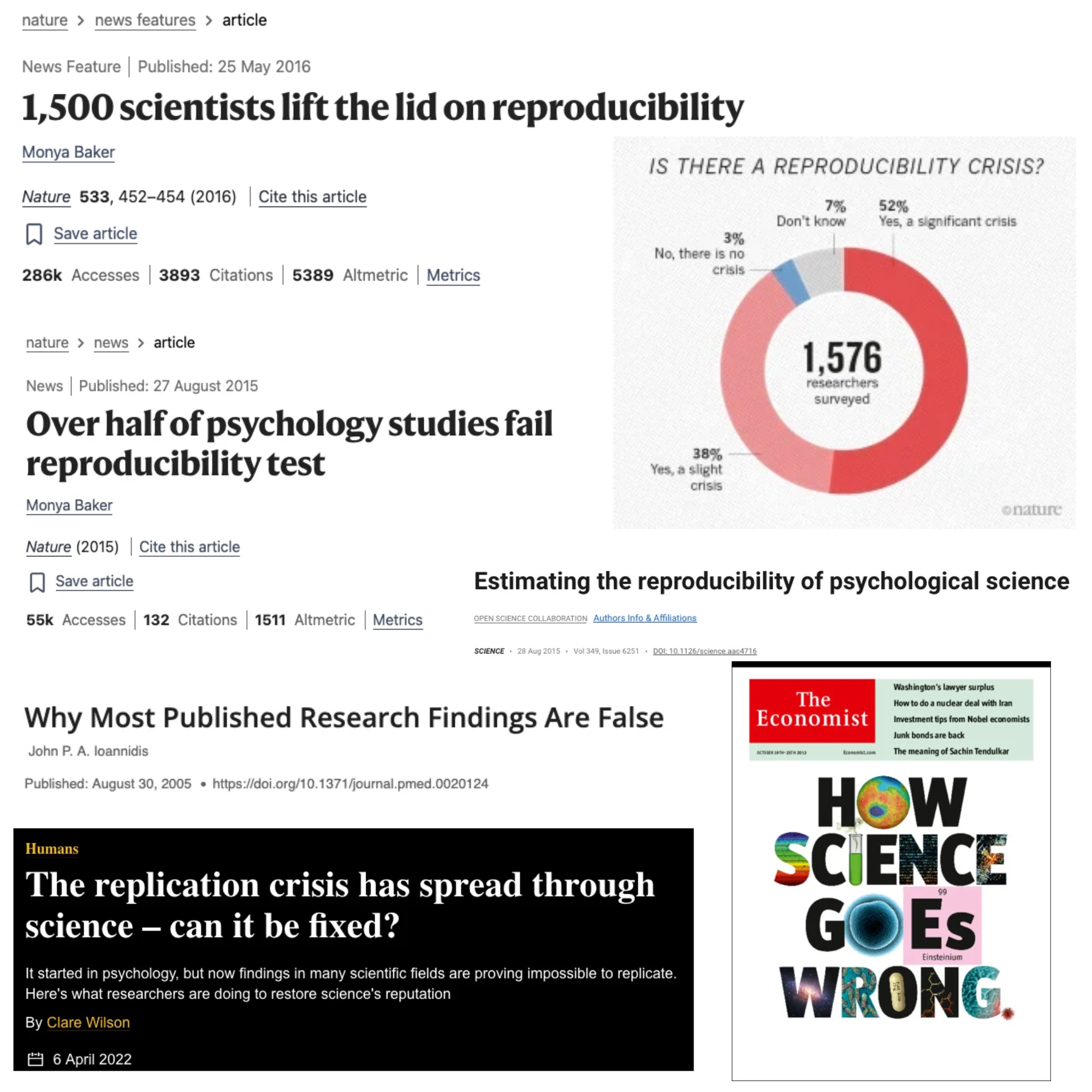
Recognizing the challenges to how science is conducted, researchers have calls for a more optimistic framing of the crisis to one of a “credibility revolution” [Vazire (2018)](Fanelli 2018). This reframing outlines where we as individual researchers have agency to adopt more transparent and reproducible ways of working in order to ensure scientific progress.
Preregistration as part of the credibility revolution
A strategy to address the “crisis” is the practice of study preregistration. Preregistrations aim to:
reduce bias
increase transparency
clarify exploratory vs hypothesis testing.
This is works by producing an uneditable time-stamped document that outlines a study plan including research questions/hypotheses, research design, data analysis before data collection and analysis. A study preregistration is then uploaded onto a verified repository so that it can be publicly shared with others (possibly after an embargo period) (Nosek et al. 2018; Parsons et al. 2022). Importantly, preregistration remains agnostic when it comes to exploratory and hypothesis testing approach to research, it aims to clearly differentiate between the two.
You may notice in the literature different terms relating to preregistration like study registration. Some researchers are advocating for a reform of terms to avoid ambiguity, as some terms can refer to different practices occurring at various stages of the research life cycle (Mayo-Wilson et al. 2025). In this tutorial, we will use the term preregistration.
One of the earliest formal implementations of registrations comes from medical clinical trials. More recently, researchers and journals in the field of psychology have rapidly adopted this practice. Preregistration is relevant to all kinds of research:
- Qualitative (interview study, focus groups, ethnographic)
- Review-based (systematic, narrative)
- Intervention/experimental (randomized control trials, factorial design)
- Observational (case study, natural experiment, longitudinal)
The concept of preregistration is not new! The scientist and philosopher Charles Sanders Peirce in ~1880s created a set of rules to test “the truth”, with one being that hypotheses should be stated before data collection (Peirce 1883).
Being able to understand the different research approaches, study designs and key concepts will help provide context for the steps required to do a study preregistration. We will explore some research methods.
What would you do?
Imagine if your PhD lab mate Max came to you with this dilemma:
“I’ve been analyzing the data from my first thesis chapter (which I really want to publish, as it will help with my chances of getting a post doc). One of my hypotheses is that X influences Y. I’ve measured many variables to test this hypothesis. However during the data analysis, results seem to show X has no effect on Y, unless I remove a variable. Do you have any suggestions of what I should do?”
What would you recommend Max does from the options listed below?
We will revisit Max’s dilemma throughout this tutorial and hopefully by the end you will be more confident at identifying potential issues and recognize how preregistration can help safeguard against questionable research practice and promote more credible research.
Summary
Researchers make a lot of decisions during the research process
How and when researchers make these decisions matters for the credibility of science
Preregistration is a practice that aims to reduce bias, increase transparency, clarify exploratory vs hypothesis testing.